Moved the blog Art of Coaching Speed so I can manage it better.
http://artofcoachingspeed.com/
What started as an exercise in gathering my thoughts for training my own staff has grown. I look forward to helping many coaches develop their skills and training techniques. Hopefully I'll provoke some thought along the way.
Showing posts with label Art of Coaching. Show all posts
Showing posts with label Art of Coaching. Show all posts
Wednesday, August 25, 2010


Monday, July 19, 2010
Training Prescription: Placebo
A post on Precision Nutrition got me thinking about a key aspect in the Art of Coaching; the Placebo effect. As a performance coach you will have to understand this and manage it, and potentially employee it.
During this year's NFL Draft preparation, we had athletes that struggle with the over-reaching phase. Now understand, most collegiate football players have not gone through an extended over-reaching period that affects them neuromuscularly. This may sound like a knock on strength programs, but its not. In a football offseason, they are making steady progression and the emphasis is strength, power and mass in most cases.
Under the stress of the NFL draft process and preparing for the Combine and Pro Days, these athletes struggle with the feeling of over-reaching. We often look to effectively use some methods that may be as much "placebos" as anything else.
Here's one we see every February. We have the case of an athlete preparing for the NFL Combine. His focus is the 40 and nothing but. Training is going great. Times in the 10 and 20-40 are dropping. He's been training hard and technique is better when we breakdown the video analysis.
The problem, he's 2 weeks out and is coming out of an overreaching phase still. Even though he has shown all those improvements, his NMS is just recovering and supercompensating as evidenced by various jumps we measure.
This concept of overreaching is hard to fully accept for a few. He has to have that current 40 time. When he gets it and doesn't see that all time PR yet, he flips out. Literally. Loses all belief. Wants to throw everything in the training plan out the window. Wants to go find another speed coach to work magic.
So what do we do as coaches? For one we go back and review the plan we set. We remind him how we said this would happen and actually means everything is working. We show him the same progression for guys who have ran great PRs in the 40 in previous years training with us.
Still he's off the reservation.
So, we also breakout PLACEBO.
 Now most people have some idea of the placebo effect. In a classic pharmaceutical study design, there is the group that gets the drug, the control group who gets nothing, and the group that gets the placebo . The placebo is something that is inert. It has no effect. However, what has been documented for the last half 50 years is that the placebo group will probably show results.
"Whether you believe it will or won't work, you're right" is an old adage that sums it up. The placebo effect is any phenomenon that occurs from a person’s belief and perceptions, rather than from the actual chemical-physiological effects of a drug.
Placebos can have a huge effect. It is one of the confounding factors in many areas of medical research. It's also a confounding factor in performance training. What is really causing some of the results we see.
If an athlete uses _____________(fill in the blank with any treatment or modality here) then after 3 weeks receiving it, they feel 90% better. That's an effective treatment it seems. Great!
Looks great until you realize that an athlete receiving what looks like the same treatment, but its a sham, and they still get 60% better. A little confusing to what's really happening. They feels 60% better, but the treatment/modality wasn't real so that's not why.
Now imagine there was a way (in pharmaceuticals this is easier) that a third athlete get the treatment but doesn't know it. takes the real drug, but they don’t know. (Maybe we do myofascial work while they sleep?) They only feel 30% better.
If we compare these three groups we can see that that 90% is actually 30% real effects plus 60% placebo.
OK, so the placebo effect is real. But this is training not a pharmaceutical study, right? This is physical, you can't fake it can you?
Not so fast. Watch this video.
Remember that NFL Combine athlete? What ails him is doubt, so we breakout one of our tools to address it.
He mentions during the discussions that his hip was tight.
"Really? Tell me more." "That could hold you back a little. Let's see the PT." The PT finds that its a little tight like always. We know he has been convinced that he needs something "extra"and he's heard the hype that A.R.T. is amazing from some other guys. So we schedule some A.R.T. on it for him. We address the "hip issue" while also taking care of the normal recovery we'd planned.
 Walla! When he runs again he sees improved times and is fired up again to get to the Combine.
Do we know if its the treatment or the placebo effect? No.
We know we trained him well and that the additional A.R.T. wouldn't hurt. (don't misunderstand, I strongly believe in many soft tissue techniques including A.R.T.) We allowed an opportunity for his beliefs in A.R.T. to help him.
Make sure you look at the entire picture. The placebo effect is scientifically documented. Don't forget it.
During this year's NFL Draft preparation, we had athletes that struggle with the over-reaching phase. Now understand, most collegiate football players have not gone through an extended over-reaching period that affects them neuromuscularly. This may sound like a knock on strength programs, but its not. In a football offseason, they are making steady progression and the emphasis is strength, power and mass in most cases.
Under the stress of the NFL draft process and preparing for the Combine and Pro Days, these athletes struggle with the feeling of over-reaching. We often look to effectively use some methods that may be as much "placebos" as anything else.
Here's one we see every February. We have the case of an athlete preparing for the NFL Combine. His focus is the 40 and nothing but. Training is going great. Times in the 10 and 20-40 are dropping. He's been training hard and technique is better when we breakdown the video analysis.
The problem, he's 2 weeks out and is coming out of an overreaching phase still. Even though he has shown all those improvements, his NMS is just recovering and supercompensating as evidenced by various jumps we measure.
This concept of overreaching is hard to fully accept for a few. He has to have that current 40 time. When he gets it and doesn't see that all time PR yet, he flips out. Literally. Loses all belief. Wants to throw everything in the training plan out the window. Wants to go find another speed coach to work magic.
So what do we do as coaches? For one we go back and review the plan we set. We remind him how we said this would happen and actually means everything is working. We show him the same progression for guys who have ran great PRs in the 40 in previous years training with us.
Still he's off the reservation.
So, we also breakout PLACEBO.
 Now most people have some idea of the placebo effect. In a classic pharmaceutical study design, there is the group that gets the drug, the control group who gets nothing, and the group that gets the placebo . The placebo is something that is inert. It has no effect. However, what has been documented for the last half 50 years is that the placebo group will probably show results.
"Whether you believe it will or won't work, you're right" is an old adage that sums it up. The placebo effect is any phenomenon that occurs from a person’s belief and perceptions, rather than from the actual chemical-physiological effects of a drug.
Placebos can have a huge effect. It is one of the confounding factors in many areas of medical research. It's also a confounding factor in performance training. What is really causing some of the results we see.
If an athlete uses _____________(fill in the blank with any treatment or modality here) then after 3 weeks receiving it, they feel 90% better. That's an effective treatment it seems. Great!
Looks great until you realize that an athlete receiving what looks like the same treatment, but its a sham, and they still get 60% better. A little confusing to what's really happening. They feels 60% better, but the treatment/modality wasn't real so that's not why.
Now imagine there was a way (in pharmaceuticals this is easier) that a third athlete get the treatment but doesn't know it. takes the real drug, but they don’t know. (Maybe we do myofascial work while they sleep?) They only feel 30% better.
If we compare these three groups we can see that that 90% is actually 30% real effects plus 60% placebo.
OK, so the placebo effect is real. But this is training not a pharmaceutical study, right? This is physical, you can't fake it can you?
Not so fast. Watch this video.
Remember that NFL Combine athlete? What ails him is doubt, so we breakout one of our tools to address it.
He mentions during the discussions that his hip was tight.
"Really? Tell me more." "That could hold you back a little. Let's see the PT." The PT finds that its a little tight like always. We know he has been convinced that he needs something "extra"and he's heard the hype that A.R.T. is amazing from some other guys. So we schedule some A.R.T. on it for him. We address the "hip issue" while also taking care of the normal recovery we'd planned.

Do we know if its the treatment or the placebo effect? No.
We know we trained him well and that the additional A.R.T. wouldn't hurt. (don't misunderstand, I strongly believe in many soft tissue techniques including A.R.T.) We allowed an opportunity for his beliefs in A.R.T. to help him.
Make sure you look at the entire picture. The placebo effect is scientifically documented. Don't forget it.
Thursday, July 8, 2010
Soft Tissue Management: Whats Best?
Whats most important for your athletes to do for their recovery? Stretching? Foam Rolling? Whole Body Vibration? A.R.T.? Modalities? Cold Tubs?
Should it be the ATCs, coaches, massage therapist, chiropractor, or physical therapist?
and on and on and on....
 Certain coaches will argue that one or another from the above lists is the key. They're all probably right in some case.
I know I used to get too caught up in specific approaches. This was very true in my earlier years as a coach when I was getting exposed to specific methods in the firstplace. When you witness a good practitioner, who believe in what they are doing, and applies it consistently, you will see benefits.
As I kept (and still am) exposed to different methods, you start to get a more complete picture. Forgot the names and various intial and trademarked systems, and start to think TISSUE QUALITY MANAGEMENT.
Thats what its about after all. Maintaining the integrity, capacity and functionality of the body's tissues. Muscle may lead many lists, but more and more people are realizing its also fascia, tendonous/bone junctions, and joint capsules.
 The beautiful part is that once you get beyond thinking just about one tissue, or one approach, you'll find its the combination that really gets results. The best people I work with use a combination of methods. The massage therapist who is doing as much stretching as soft tissue work. The chiropractor who is doing myofascial work, with stretching, manipulation and active movement. The performance coach who is having his athletes do specific, focused self myofascial work and then AIS stretching.
It's about getting the tissue to the quality required. To allow the athlete to recover and be prepared for the next training session or competition. That's the goal. Tissue quality.
Should it be the ATCs, coaches, massage therapist, chiropractor, or physical therapist?
and on and on and on....

I know I used to get too caught up in specific approaches. This was very true in my earlier years as a coach when I was getting exposed to specific methods in the firstplace. When you witness a good practitioner, who believe in what they are doing, and applies it consistently, you will see benefits.
As I kept (and still am) exposed to different methods, you start to get a more complete picture. Forgot the names and various intial and trademarked systems, and start to think TISSUE QUALITY MANAGEMENT.
Thats what its about after all. Maintaining the integrity, capacity and functionality of the body's tissues. Muscle may lead many lists, but more and more people are realizing its also fascia, tendonous/bone junctions, and joint capsules.

It's about getting the tissue to the quality required. To allow the athlete to recover and be prepared for the next training session or competition. That's the goal. Tissue quality.
Monday, July 5, 2010
The Blind Men and the Elephant
Talk to a bunch of coaches, go online, or to a conference and you will get passionate arguments about the right way to train an athlete. Each coach can give examples that fit their point of view. In many ways though, it's a lot like this Indian fable...
 One day, three blind men happened to meet each other and gossiped a long time about many things. Suddenly one of them recalled, " I heard that an elephant is a queer animal. Too bad we're blind and can't see it."
"Ah, yes, truly too bad we don't have the good fortune to see the strange animal," another one sighed.
The third one, quite annoyed, joined in and said, "See? Forget it! Just to feel it would be great."
"Well, that's true. If only there were some way of touching the elephant, we'd be able to know," they all agreed.
It so happened that a merchant with a herd of elephants was passing, and overheard their conversation. "You fellows, do you really want to feel an elephant? Then follow me; I will show you," he said.
After reaching their destination, the merchant asked them to sit on the ground and wait. In a few minutes he led the first blind man to feel the elephant. With outstretched hand, he touched first the left foreleg and then the right. After that he felt the two legs from the top to the bottom, and with a beaming face, turned to say, "So, the queer animal is just like that." Then he slowly returned to the group.
Then the second blind man was led to the rear of the elephant. He touched the tail which wagged a few times, and he exclaimed with satisfaction, "Ha! Truly a queer animal! Truly odd! I know now. I know." He hurriedly stepped aside.
The third blind man's turn came, and he touched the elephant's trunk which moved back and forth turning and twisting and he thought, "That's it! I've learned."
The three blind men thanked the merchant and went their way. Each one was secretly excited over the experience and had a lot to say, yet all walked rapidly without saying a word.
"Let's sit down and have a discussion about this queer animal," the second blind man said, breaking the silence.
"A very good idea. Very good." the other two agreed for they also had this in mind.
Without waiting for anyone to be properly seated, the second one blurted out, "This queer animal is like our straw fans swinging back and forth to give us a breeze. However, it's not so big or well made. The main portion is rather wispy."
"No, no!" the first blind man shouted in disagreement. "This queer animal resembles two big trees without any branches."
"You're both wrong." the third man replied. "This queer animal is similar to a snake; it's long and round, and very strong."

Another modern version has a different ending a may fit may today's sports performance profession even more...
“We now know that the elephant is like a wall,” said the one who touched the side. “The evidence is conclusive.”to see what all the fuss was about. While the blind men were arguing fiercely, she examined the elephant. But instead of stopping after one feel, the prophet touched the whole thing, including the tail, which felt like a rope.
“I believe you are mistaken, sir," said the one who touched an ear. "The elephant is more like a large fan."
“You are both wrong,” said the leg man. “The creature is obviously like a tree.”
“A tree?” questioned the tusk toucher. “How can you mistake a spear for a tree?”
“What?” said the trunk feeler. “A spear is long and round, but anyone knows it doesn’t move. couldn’t you feel the muscles? It’s definitely a type of snake! A blind man could see that!” said the fifth blind man.
The argument grew more heated when along came a blind, self-declared prophet
“It’s just a big animal with big sides, ears, feet, tusk teeth, nose and a skinny tail,” she thought. “What a bunch of fools these guys are.”
Then the prophet said, “Stop! I have discovered the truth. I know who is right.”
Being a prophet and all, they stopped and listened and said, “tell us!”
“I have examined the elephant with mine own two hands,” she said, “and I find that you are all right.”
“How can this be?” they asked. “Can an elephant be a wall and a fan and a tree and a spear and a
snake?” And they were very confused.
The prophet explained “the elephant is a great Tree, and on this tree grow leaves like great Fans to give most wondrous shade and fan the breeze. And the branches of this tree are like Spears to protect it.
For this is the Tree of Creation and of Eternal Life, and the Great Serpent hangs still upon it.
“Unfortunately, it is hidden behind a great Wall, which is why it was not discovered until this very
day. It cannot be reached by normal means.
 “However I, in my wisdom, have discovered a Most Holy Rope, by which the wall may be climbed.
And if one touches the tree in the proper manner which I alone know, you will gain Eternal Life.”
They all became highly interested in this, of course.
The prophet then named an extremely high price for her services (or dvd or seminar), and made quite a bundle.
The college strength coach has a different perspective and environment than the physical therapist. They both differ from the track coach and what he sees. This is different than the performance coach in a private facility and different than the personal trainer.
Next time when someone has a different answer, try and consider their perspective, and keep the possibility open that they have seen something you haven't.
Beware of the strength and performance gurus who have the absolute answer and will share it for the right price. Especially when they haven't proven their worth with anything but the intern.

"Ah, yes, truly too bad we don't have the good fortune to see the strange animal," another one sighed.
The third one, quite annoyed, joined in and said, "See? Forget it! Just to feel it would be great."
"Well, that's true. If only there were some way of touching the elephant, we'd be able to know," they all agreed.
It so happened that a merchant with a herd of elephants was passing, and overheard their conversation. "You fellows, do you really want to feel an elephant? Then follow me; I will show you," he said.
After reaching their destination, the merchant asked them to sit on the ground and wait. In a few minutes he led the first blind man to feel the elephant. With outstretched hand, he touched first the left foreleg and then the right. After that he felt the two legs from the top to the bottom, and with a beaming face, turned to say, "So, the queer animal is just like that." Then he slowly returned to the group.
Then the second blind man was led to the rear of the elephant. He touched the tail which wagged a few times, and he exclaimed with satisfaction, "Ha! Truly a queer animal! Truly odd! I know now. I know." He hurriedly stepped aside.
The third blind man's turn came, and he touched the elephant's trunk which moved back and forth turning and twisting and he thought, "That's it! I've learned."
The three blind men thanked the merchant and went their way. Each one was secretly excited over the experience and had a lot to say, yet all walked rapidly without saying a word.
"Let's sit down and have a discussion about this queer animal," the second blind man said, breaking the silence.
"A very good idea. Very good." the other two agreed for they also had this in mind.
Without waiting for anyone to be properly seated, the second one blurted out, "This queer animal is like our straw fans swinging back and forth to give us a breeze. However, it's not so big or well made. The main portion is rather wispy."
"No, no!" the first blind man shouted in disagreement. "This queer animal resembles two big trees without any branches."
"You're both wrong." the third man replied. "This queer animal is similar to a snake; it's long and round, and very strong."
How they argued! Each one insisted that he alone was correct. Soon they came to blows over it, yet still there was no agreement. Of course, there was no conclusion for not one had thoroughly examined the whole elephant. How can anyone describe the whole until he has learned the total of the parts.

“We now know that the elephant is like a wall,” said the one who touched the side. “The evidence is conclusive.”to see what all the fuss was about. While the blind men were arguing fiercely, she examined the elephant. But instead of stopping after one feel, the prophet touched the whole thing, including the tail, which felt like a rope.
“I believe you are mistaken, sir," said the one who touched an ear. "The elephant is more like a large fan."
“You are both wrong,” said the leg man. “The creature is obviously like a tree.”
“A tree?” questioned the tusk toucher. “How can you mistake a spear for a tree?”
“What?” said the trunk feeler. “A spear is long and round, but anyone knows it doesn’t move. couldn’t you feel the muscles? It’s definitely a type of snake! A blind man could see that!” said the fifth blind man.
The argument grew more heated when along came a blind, self-declared prophet
“It’s just a big animal with big sides, ears, feet, tusk teeth, nose and a skinny tail,” she thought. “What a bunch of fools these guys are.”
Then the prophet said, “Stop! I have discovered the truth. I know who is right.”
Being a prophet and all, they stopped and listened and said, “tell us!”
“I have examined the elephant with mine own two hands,” she said, “and I find that you are all right.”
“How can this be?” they asked. “Can an elephant be a wall and a fan and a tree and a spear and a
snake?” And they were very confused.
The prophet explained “the elephant is a great Tree, and on this tree grow leaves like great Fans to give most wondrous shade and fan the breeze. And the branches of this tree are like Spears to protect it.
For this is the Tree of Creation and of Eternal Life, and the Great Serpent hangs still upon it.
“Unfortunately, it is hidden behind a great Wall, which is why it was not discovered until this very
day. It cannot be reached by normal means.

And if one touches the tree in the proper manner which I alone know, you will gain Eternal Life.”
They all became highly interested in this, of course.
The prophet then named an extremely high price for her services (or dvd or seminar), and made quite a bundle.
The college strength coach has a different perspective and environment than the physical therapist. They both differ from the track coach and what he sees. This is different than the performance coach in a private facility and different than the personal trainer.
Next time when someone has a different answer, try and consider their perspective, and keep the possibility open that they have seen something you haven't.
Beware of the strength and performance gurus who have the absolute answer and will share it for the right price. Especially when they haven't proven their worth with anything but the intern.
Monday, June 28, 2010
Olympic Lifts vs. Explosive Jumps for Speed

I remember sitting having a couple of beers with Steve Plisk (a very knowledgeable coach and big O-lift advocate) and saying "the Olympic lifts are NOT about power in the triple extension." My assistant director used to work for him and I think he was ducking under the table at that point. Steve sat up a little straighter and gave me a look that said the next things out of my mouth had better be good.
"It's the fact that you can develop multiple strength & power qualities at the same time, and maybe most importantly it's the ECCENTRIC Rate of Force Development that's the most beneficial." As the discussion went on we agreed on these benefits and Steve didn't try to put me under the table.
I think Rob's post was really important and I think many will miss some points. Too much of the discussion on O-lifts revolves around "power". However, many strength coaches are not thinking through the entire force velocity curve as Rob elaborates. What part are you trying to train? What part does your athlete need in their sport/position?
Too much of the conversation also revolves around clean variations. There are also snatch and jerk variations to add to your toolbox.
As a training tool you can drastically change the FORCE part of the curve. From much heavier than bodyweight (or most added implements) to less than bodyweight. Yes less. In the teaching phases a bodyweight jump may require more force in that basic motion than doing a light bar. And for the more load side of the equation, there are very few ways that you can add load at the level of O-lifts without a barbell. Dumbells, kettlebells, weight vests wont do it.

As a training tool you can train concentric and eccentric qualities in a controlled manner and affect them in mutli-joint movements that develop the legs hips, core, thoracic spine and shoulder girdle.
As a training tool you have some objective measure of rfd and success. You either make the lift or not. Use a Tendo or Gym Aware unit and you have greater feedback.
As a training tool you can work on some unilateral stability and strength qualities (think split lifts).
Is there anything magic about them? No.
Are they the only tool you should have? No.
Are your performance coaching skills complete without them? NO.
Do I use O-lifts? Yes, extensively.
Do I use jumps, plyos, weighted jumps, vertimax, medicine balls,weighted sleds, dynamic effort band squats, etc...? Yes, extensively.
Do I recommend consistent use of O-lifts in a young developing athlete? Yes,as the primary method for explosive qualities.
Do I believe they are "safe"? Yes, as much as any training technique.
Do I believe many programs are doing them poorly and should stop? Yes. Or better have the coaches learn how to coach.
Does using the crappy techniques we often see cause a problem? Yes, but not just in injury risk, but also in poor transfer of training.
Do I believe that examples of poor transfer abound? Yes. If you are lifting the weight but, you end with no hip extension, legs wide, back arched, or holding bar on wrists, you are not helping performance.
To go back to the question, here is why I may choose one versus the other.
Efficiency - I know in Joe DeFranco's rationale he seems to advocate other methods to give athletes"more bang for their buck". I am always looking for that as well. The fewer things I can do and the less energy expended to gets results is better for an athlete. That's exactly why I often will use an O-lift. I get to train more strength qualities in more of the body with that movement. Put a gun to my head and tell me I have to get the best results developing and preventing injury in athletes with just one movement. I say O-lift variations.
If I have the luxury of abundant time and energy, than doing various other methods of strength and power development can work very well.

Athlete Preference - Don't forget this. I have many times had athletes that have been convinced by other strength/performance coaches that the O-lifts are bad. I've had the athletes who were always told to lift more in the clean and felt the pains who don't want to do them. So the question is then, Do I send them away because they don't fit me,or do I find what fits them? I will try and fit a program that fits them and their goals. If an O-lift would be the best way, I will tell them that. It's never the ONLY way,although it may be a BETTER way.
Eccentric Needs- It's an entirely different thread, but the importance of training eccentric qualities is still under-rated in our profession. It's one of the most critical factors in performance enhancement, injury prevention, and injury rehabilitation. Various jumps (especially if externally loaded with weight vests, bungee cords, or other means) are very useful. However for any athlete in a contact sport with player impacts, O-lift variation are maybe the best method for progressive, safe and effective eccentric rate of force development. You don't get this benefit in pulls alone or many jumps alone.
Facilities - Do I have the platforms, bumpers and bars? If not, such as training on the field or while travelling on the road, I will have to utilize other methods. If I don't have any other tools, I'm not serving my athletes.

Training Phase - In season versus off season relates a lot back to the efficiency point. While I love lots of jumps and plyos, I can get good stimulus on explosive strength qualities with the O-lifts with less impact and injury risk at times. Do I need specific explosive qualities or general? I may do O-lifts in greater volume earlier, and then reduce their volume and add more specific movements as we move toward a competition phase.
Guys it's a tool. I believe a relatively safe,effective and efficient one. I still believe there are some every good coaches who don't use them. I believe there are some poor coaches who do. I think there are lots of coaches who don't know how to do them or coach them and make excuses why.
Ken
Thursday, June 17, 2010
Art of Coaching; Know What you Don't Know
As a performance coach today you may be asked to help in the areas of strength training, rehab, conditioning, core training, tissue quality, biomechanics, and more. There is lots to know.
 Face it now; you'll never be an expert in all of them.
I often see young coaches doing this and they get caught when they don't really know. They want to answer, but need to learn to say, "I don't know." Tell people what you know, then go do some research and learn something. This is where most of your real learning will come from. School just gives you the tools to do that research and think critically.
Recently I was working with a head ATC who did this. I was pissed off, because it involved the area of concussions. This is a critical issue involving player safety. If you don't know, DON'T FAKE IT. Have the guts to put your ego aside and ask someone.
To be a master coach you need to develop wisdom. Wisdom doesn't mean knowing all the answers.
Understanding these various fields, and having experiences in them will make you better. Spending time as a student athletic trainer and in a sports medicine setting made me a better performance coach. Still, I wouldn't for a second think I could do a better shoulder eval than an experienced and educated ATC. I studied biomechanics in grad school, but wouldn't think I know better than my friend John Garhammer.
 Learn your strengths and weaknesses. Learn to ask others for their expertise. If you are part of a team of professionals, respect and learn from them. Even the superheroes always have to use each others' strengths to overcome the villains. You don't have to do it all alone.

I often see young coaches doing this and they get caught when they don't really know. They want to answer, but need to learn to say, "I don't know." Tell people what you know, then go do some research and learn something. This is where most of your real learning will come from. School just gives you the tools to do that research and think critically.
Recently I was working with a head ATC who did this. I was pissed off, because it involved the area of concussions. This is a critical issue involving player safety. If you don't know, DON'T FAKE IT. Have the guts to put your ego aside and ask someone.
To be a master coach you need to develop wisdom. Wisdom doesn't mean knowing all the answers.
Understanding these various fields, and having experiences in them will make you better. Spending time as a student athletic trainer and in a sports medicine setting made me a better performance coach. Still, I wouldn't for a second think I could do a better shoulder eval than an experienced and educated ATC. I studied biomechanics in grad school, but wouldn't think I know better than my friend John Garhammer.

Tuesday, June 1, 2010
The Master at Work
Leonardo da Vinci was a Master. He was a master of both Art & Science. Paintings, sculpture, engineering, anatomy, military tactics. What an amazing mind. To become a master coach we need to develop our skills in both the art & science of coaching athletes.

 As I walked through an exhibit at the Getty Museum on Leonardo this past weekend, I was amazed by all of the work that preceded a masterpiece. There pages and pages of studies. Studies may focus on a single body part, or a certain part of a bigger work of art. In many cases da Vinci spent weeks, months or even years on the preparation for a work of art. Pages after pages of notes, ideas, drawings to prepare. While many see the finished work, the preparation is behind the scenes.
One of the skills in coaching that is often lost is the planning stages. Once you have some confidence and knowledge, you can easily walk out and "wing it" on many training sessions. I know I have fallen into this trap at times.

Planning a training session makes a difference. Its a battle plan that lets you be prepared and lets you review. The planning itself may be the most important part. Its the act of thinking about what your overall strategy, detailing the tactics and execution for the day, and using your coaching art to make it fit together to create a whole that is greater than the sum of its parts.
Sometimes I've seen coaches feel like needing a plan is demeaning or "rookie." If a master like da Vinci spent this much time planning and preparing, I'd feel pretty good about doing it as well.
Thursday, April 29, 2010
US Olympic Committee Training Design Conference
Early Specialization and Deep Practice
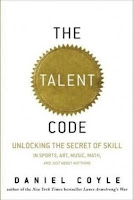
 The Talent Code
 However, as the discussion continued, some other thoughts emerged from many of our elite US coaches. While they want the athletes to play the game more, in many cases they wish the adult coaches would get out of the way. “Too much time is sport is being driven by coaches, and not the players. It drill centered, instead of centered on playing the game” remarked one of the best coaches in the world with at least one gold medal to his resume.
As this line of discussion progressed over the 3 days, it became clear that the coaches advocating more pay, weren’t advocating the year round, organized competition, coach driven, and drill center activity we see in sport. For younger athletes quality play and skill development can happen in 1/3 the time when lead by a quality coach compared to what they see happening.
 Deep Practice
This tied us back to some of the ideas presented in The Talent Code. One of the key ones is that champions practice better than others and great coaches create an environment for “deep practice.” We need to understand it’s not about the 10,000, but the practice that is built in that time. Just spending 10,000 hours won’t get you to the top. It has to be focused and engaged. Note this doesn’t mean just doing an activity – it means continuously pushing the limits of your ability, always operating just out of your comfort zone, making mistakes and learning to fix them, getting comfortable with that dynamic of improving by failing. And it’s making sure that time is spent doing the activities that you need to improve, whether it’s ball handling in soccer, technique in tennis, or tactical awareness in football.
As we discussed this concept of “deliberate” or “deep” practice, it was clear that playing full sided competitive games in organized tournaments doesn’t do this. Numerous examples were given, but one of our US National Team coaches in soccer talked about it well.
He illustrated that if you have a 90 minute game plus 10 minute half you have spent 100 minutes on a game. Add to that 3 games as is often seen in a tournament weekend and we have 300 minutes. Five hours.
In a typical game the time each player has the ball isn’t distributed evenly, but for the sake of discussion let’s assume it is. That’s 90 minutes divided by 22 players on the field, which means the each player has the ball for all of 4 minutes and 10 seconds. Do it for 3 games and now you have maybe 13 minutes of skill development with the ball. Yes, there is tactical development, but even then how much of that time is wasted when the layer may not be that involved in the space of play?
 Thirteen minutes. As the coach pointed out he could have a well designed practice with various individual, small sided and situational games that would give each player twice as much time with the ball, in just an hour. One hour versus 5. Add to that the concept of "deep practice" and you get even more out of that time.
Which is going to help that player develop the basic fundamental skills better? Go crazy and take that time to 2 hours over the weekend and you’ve quadrupled the skills development.
Does this mean don’t play in competition? No. None of them were saying that. What they were saying is we don’t need our future champions to be playing in organized competition, or in low yield practice, year round in just one sport.
As I was sitting in a conference room at the US Olympic Training Center, listening to World Championsip and Gold medal coaches from several sports, a more comprehensive view of the problems with early specialization came into perspective.
 The Talent Code
Daniel Coyle, author of The Talent Code gave the keynote address and discussed some of the concepts in his book. It's a great read for anyone involved in developing talent, whether it's athletic, music or other.
Daniel travelled around the world observing what was happening at talent hotbeds. Sports and music academies that were repeatedly producing champions against all statistical odds. He wanted to find what they have in common. Many of the things
Early Specialization
Many coaches there agreed that in general we have too much specialization and year round competition at an early age. The lack of physical education in schools was also a key issue facing development of high level athletes in the future. How many champions are being lost because they aren’t being exposed to sports and physical activity in school? How many are burnt out by continual competition in a single sport? How many overuse injuries could be prevented? How many are missing their true sport calling because they only play one?
As I was giving the cry of too much specialization at an early age, many of the coaches were talking about the importance of our US athletes spending more time playing the sport. They were saying that we are already more athletic in many cases, but we need better skills and better ability to read the game. US athletes are athletic, but they aren’t as creative or as tactically savvy as many other countries.
It is hard to argue that if our biggest problems aren’t athleticism and injury we should be playing less. To develop the tactical awareness you clearly need to play the game. To develop precise ball skills seen in volleyball and soccer you need to be playing with the ball. So playing year round would help if you know you are going to be a high level player in some sports.
We also had some discussion revolving around the so called “10,000 hour rule.” Well if I need 10,000 hours to become a master at a skill, isn’t getting started earlier (early specialization) and practicing it year round a good idea? It would seem so.
 However, as the discussion continued, some other thoughts emerged from many of our elite US coaches. While they want the athletes to play the game more, in many cases they wish the adult coaches would get out of the way. “Too much time is sport is being driven by coaches, and not the players. It drill centered, instead of centered on playing the game” remarked one of the best coaches in the world with at least one gold medal to his resume.
As this line of discussion progressed over the 3 days, it became clear that the coaches advocating more pay, weren’t advocating the year round, organized competition, coach driven, and drill center activity we see in sport. For younger athletes quality play and skill development can happen in 1/3 the time when lead by a quality coach compared to what they see happening.

This tied us back to some of the ideas presented in The Talent Code. One of the key ones is that champions practice better than others and great coaches create an environment for “deep practice.” We need to understand it’s not about the 10,000, but the practice that is built in that time. Just spending 10,000 hours won’t get you to the top. It has to be focused and engaged. Note this doesn’t mean just doing an activity – it means continuously pushing the limits of your ability, always operating just out of your comfort zone, making mistakes and learning to fix them, getting comfortable with that dynamic of improving by failing. And it’s making sure that time is spent doing the activities that you need to improve, whether it’s ball handling in soccer, technique in tennis, or tactical awareness in football.
As we discussed this concept of “deliberate” or “deep” practice, it was clear that playing full sided competitive games in organized tournaments doesn’t do this. Numerous examples were given, but one of our US National Team coaches in soccer talked about it well.
He illustrated that if you have a 90 minute game plus 10 minute half you have spent 100 minutes on a game. Add to that 3 games as is often seen in a tournament weekend and we have 300 minutes. Five hours.
In a typical game the time each player has the ball isn’t distributed evenly, but for the sake of discussion let’s assume it is. That’s 90 minutes divided by 22 players on the field, which means the each player has the ball for all of 4 minutes and 10 seconds. Do it for 3 games and now you have maybe 13 minutes of skill development with the ball. Yes, there is tactical development, but even then how much of that time is wasted when the layer may not be that involved in the space of play?

Which is going to help that player develop the basic fundamental skills better? Go crazy and take that time to 2 hours over the weekend and you’ve quadrupled the skills development.
Does this mean don’t play in competition? No. None of them were saying that. What they were saying is we don’t need our future champions to be playing in organized competition, or in low yield practice, year round in just one sport.
Thursday, April 15, 2010
Situational Coaching
What's your coaching style? Do you adjust for different athletes? If you're not adjusting your coaching to the athletes you may be leaving some behind.
 Now that's a choice many performance coaches have made. Consciously or not, they have a coaching style, and if it doesnt work for some athletes they can go somewhere else. If you are in a position where you can pick which athletes you want to work with, then this works. More power to you.
If you work in a team setting, or want to reach a larger audience, then you better be able to adjust your coaching style to your athletes. Personally I enjoy the challenge. It's one of the skills of coaching.
Adjusting your coaching style doesn't need to mean that you do things that arent you, don't fake it. Just understand that the methods of instruvting and motivating need to adjust based on the individual charactersitics of the athletes you are working with.

Athletes in each of these zones will need a different coaching approach to acheive their optimum results. A fundamental concept here is that there is no one best approach to coaching, It's situational. It depends on the athlete's motivation and skill in that task.
 • Guiding (low skills/low motivation): If you give this athlete a task and leave them on their own to do it, they probably won't succeed. This athlete needs guidance, by a coach that stays close at hand giving positive feedback, pointing out success to fuel motivation, and showing them the task solutions. They are probably more introverted and less confident in this situation, so don't try to be a cheerleader or drill instructor with your motivaion.
The guiding coach has to help the athlete envision a future they can create and take ownership of. The short-term goals are key to achieving this. Progress is structured through a series of cumulative efforts and short-term tasks with deadlines. The coach needs to stay in close contact alongside this athlete to monitor the progress being made and give constant praise and encouragement for the achievements. Critical feedback needs be deliver in the classic praise-critical-praise sandwhich and not in a public setting.
 • Directing (low skills/high motivation): This athlete is motivated and often may be working really hard, just at the wrong things or using poor technique. The coaches job here is to harness that motivation and direct it to the right tasks and proper efforts.
The directing coach needs to effect a real commitment from the athlete on the direction of training and striving for an agreed vision of the future. This helps ensure that activity is consistent with this goal and not have that high motivation fuel useless or detrimental efforts. If you don't get them to buy in to your vision or your expertise, they will be off doing something else with all that motivation.
If the coach tries to fire this athlete up, but doesn't fix the skill or what the athlete is doing, burn-out or injury may be around the corner. They don't need motivation, they need direction. The coach stands alongside them and points them in the right direction. This coaching may be reflective feedback and support or very authoritative directions depending on the athlete. The astute coach will be looking for the opportunities when they can reduce directions, as the athlete demonstrates increasing confidence.
 • Inspiring (high skills/low motivation): This athlete has the skills, but has lost confidence or passion in what they are doing.
You will need to work tactfully to explore the reasons that may be underlyingand creating the low motivation levels. Although often related, its important to discover whether the passion is gone or they have lost confidence.
A range of short-term actions should be planned that will bring repeated small successes to build confidence and generate new enthusiasm. Working alongside in this context requires the leading teacher to be in regular contact throughout the programme of activities, maintaining a focus on the positives.
When the passion is gone, don't go for the over-blown hype. Instead find the ways to re-engage them in the process and not just the outcome. To be engaging tasks need to be at a high enough level or else they will be boring. Helping an athlete find their passion takes a skilled coach, but will bring great rewards.
 • Delegating (high skills/high motivation): This athlete is very skilled at the tasks and is very motivated to improve. If only every athlete was like this you may think, but this athlete has very specific coaching needs as well. With this athlete you give them increased ownership of decisions and provide them the role of "self coaching" as a partner.
The freedom to experiment needs to be well supported to allow mistakes to happen and to learning from them. Coaching this athlete will be an interactive partnership that involves them in the decision making, program planning, and feedback. You supervise, but don't micormanage. You don't have to be next to them or even there for every task. Get their feedback first to gauge how much feedback they need from you. You counsel, instead of direct them.
Ensure that opportunities are created to share this learning with other athletes. Often creating new coaching opportunities and responsibilities for the athlete through coaching others, helps them themselves to further develop their own capacity in the team or group setting.
This video on situational leadership overviews the concept well although the computer generated voice may make you throw your computer.
All in all, the final question is about how you are going to coach. If you want to reach as many athletes as you can, and help them to their best possible outcome, then you need to condsider their situation. Some basics of coach always cut across all these quadrants, but for continued and wide success you will have to adapt your style.

If you work in a team setting, or want to reach a larger audience, then you better be able to adjust your coaching style to your athletes. Personally I enjoy the challenge. It's one of the skills of coaching.
Adjusting your coaching style doesn't need to mean that you do things that arent you, don't fake it. Just understand that the methods of instruvting and motivating need to adjust based on the individual charactersitics of the athletes you are working with.
The concept of Situational Leadership as propsed by Blanchard and Hershey gives a coach one perspective in how they can do this. Their leadership concepts were developed for business but have been applied in many coaching and military settings. The following matrix of an athlete's skill and motivation relative to a task is adapted from Pathways to Coaching, TLO 2001 by Bristol.


The guiding coach has to help the athlete envision a future they can create and take ownership of. The short-term goals are key to achieving this. Progress is structured through a series of cumulative efforts and short-term tasks with deadlines. The coach needs to stay in close contact alongside this athlete to monitor the progress being made and give constant praise and encouragement for the achievements. Critical feedback needs be deliver in the classic praise-critical-praise sandwhich and not in a public setting.

The directing coach needs to effect a real commitment from the athlete on the direction of training and striving for an agreed vision of the future. This helps ensure that activity is consistent with this goal and not have that high motivation fuel useless or detrimental efforts. If you don't get them to buy in to your vision or your expertise, they will be off doing something else with all that motivation.
If the coach tries to fire this athlete up, but doesn't fix the skill or what the athlete is doing, burn-out or injury may be around the corner. They don't need motivation, they need direction. The coach stands alongside them and points them in the right direction. This coaching may be reflective feedback and support or very authoritative directions depending on the athlete. The astute coach will be looking for the opportunities when they can reduce directions, as the athlete demonstrates increasing confidence.

You will need to work tactfully to explore the reasons that may be underlyingand creating the low motivation levels. Although often related, its important to discover whether the passion is gone or they have lost confidence.
A range of short-term actions should be planned that will bring repeated small successes to build confidence and generate new enthusiasm. Working alongside in this context requires the leading teacher to be in regular contact throughout the programme of activities, maintaining a focus on the positives.
When the passion is gone, don't go for the over-blown hype. Instead find the ways to re-engage them in the process and not just the outcome. To be engaging tasks need to be at a high enough level or else they will be boring. Helping an athlete find their passion takes a skilled coach, but will bring great rewards.

The freedom to experiment needs to be well supported to allow mistakes to happen and to learning from them. Coaching this athlete will be an interactive partnership that involves them in the decision making, program planning, and feedback. You supervise, but don't micormanage. You don't have to be next to them or even there for every task. Get their feedback first to gauge how much feedback they need from you. You counsel, instead of direct them.
Ensure that opportunities are created to share this learning with other athletes. Often creating new coaching opportunities and responsibilities for the athlete through coaching others, helps them themselves to further develop their own capacity in the team or group setting.
This video on situational leadership overviews the concept well although the computer generated voice may make you throw your computer.
All in all, the final question is about how you are going to coach. If you want to reach as many athletes as you can, and help them to their best possible outcome, then you need to condsider their situation. Some basics of coach always cut across all these quadrants, but for continued and wide success you will have to adapt your style.
Sunday, March 28, 2010
Multi-Directional Movements: Transit
In the last post I outlined Base Positions as a category of multi-directional movement going through my Hierarchy of Coaching Success related to speed and agility. The next catergory is transit movements. These are movements with the goal of propelling the athlete through-out their playing space (field, court, lane, etc...).

 Acceleration

Many people training athletes like to break down movements into linear and lateral. It seems natural and has a nice separation. I used do this entirely, but now only do it in early phases. The reality of sports is usually that these are always intertwined out on the field. Training should work that way as well.
Big 4
For all of the transit movements, I still emphasize the Big 4 as I was introduced to from Loren Seagrave. It is a breakdown that covers the different aspects of the movement as well as ties the rest of training to improving movement. This should be an entire post of it's own, but here is a quick rundown.
Big Force- Small Time
- Proper Direction
- Optimal Range of Motion
Big Force
To propel the athlete significant forces have to be applied to the ground. Drive harder may be the key for some athletes. This means that we need to consider the strength qualities of; starting strength, rate of force development, max strength, relative strength and reactive strength. The importance of each will differ with the transit modde, sport and conditions to some degree. We will need to consider how we improve these qualities through drills, resistance training, and plyometrics.
Small Time
In sports, speed counts so applying that force in a small time, while in contact with the ground, is critical. This requires the right strength qualities as mentioned above. Some athletes need to train to apply the forces faster. Again this comes back to specific strength qualities and how we cue and emphasize certain movements.
Proper Direction
Force is a vector which means it has a direction as well as quantity. Efficient and effective movement requires not just the right magnitude of force, but the right direction. As we examine movement mechanics, especially multi-directional, the proper direction of application becaomes important.
Optimal Range of Motion
To move well an athlete requires the proper range of motion through their joints and soft tissue structures. In many movements it's important to note that it's not the largest rom but the optimal. In many sporting situations, having their feet close to the ground to react quickly and apply force is better than having them far away.
Linear
Sprinting is a pretty straight forward mode of transit, and breaking it down into acceleration mechanics and maximum velocity mechanics is understandable. The mechanics of each phase is different and the need for each depends the sport and position.
 Acceleration
Overall the frequency of acceleration mechanics is much greater across many sports and positions. If you have to move farther than one step you need to use some degree of acceleration mechanics.
We will train this with basic mechanics drills that build specific strength, kinesthetic awareness and range of motion. Wall drills, skips and harness work make up the bulk of this.
Then we have drills to elicit a specific training effect. Sleds, hills, bounds, and plyometrics all can accomplish this by adding resistance or disrupting the current motor attractor landscape. We also need to create applied situation where the athlete can apply these parameters and develop the best movement solution for themselves.
Max Velocity
There are clearly cases where an athlete need to maintain higher sprinting speeds. These max velocity mechanics apply when the athlete has linear momentum and they differ from acceleration.
 Much like acceleration we will utilise diferent max v mechanics drills. Not so much to create an exacting stereotype of movement, but to develop specific strength, local energy systems, kinesthetic awareness and range of motion. We may use fast leg drills, step over runs, in/outs, and butt kick to help the athlete develop new motor parameters.
For a neuromuscular training effect we will look to bounding, sleds, weight vests, slight inclines, and slight declines to acheive the desired effect. many of these are used in contrast with unloaded efforts to not just have a training effect, but to enhance motor control as well.
 In some cases moving fast for the field sport athlete is more tactically effective with a higher stride frequency. A long stride length requires the feet are further from the ground for longer. When in a sporting situation where an athlete may have to react to stimuli of opponents, objects, or changing environment, having their feet off the ground is bad. If they can move close to the same speed but at a higher frequency and maybe lower amplitude, it may be advantageous. This is one of the biggest differences between track speed and field speed.
In this case we will work on developing that from multiple standpoints. First we will try to use various plyometrics drills that focus on developing reactive strength. This will be required to be effective with a high turnover. Then we will use high frequency based drills to emphasize turn-over. Drills like stepover runs in the ladder, running into a ladder or spacing and maintaining speed, and 2-inch runs are a few examples. Then we applying it. Using live drills in which the athlete needs to react while moving fast wil help them find the best movement solution.
 Backpedal
Somehow people always forget backwards when talking about linear speed. We need to consider how athletes move backward. There are usually two basic approaches; backward running and sliding. Backpedal is a true "linear" movement relative to the hips and center of gravity. Most backward sliding movements are actually more of a "lateral" movement because the hips have been turned even if the head and shoulders haven't.
The purpose again is to have a way of looking at the demands on the athlete so we can determine their training needs. Next article we will cover the lateral categories of transit movements,
We will train this with basic mechanics drills that build specific strength, kinesthetic awareness and range of motion. Wall drills, skips and harness work make up the bulk of this.
Then we have drills to elicit a specific training effect. Sleds, hills, bounds, and plyometrics all can accomplish this by adding resistance or disrupting the current motor attractor landscape. We also need to create applied situation where the athlete can apply these parameters and develop the best movement solution for themselves.
Max Velocity
There are clearly cases where an athlete need to maintain higher sprinting speeds. These max velocity mechanics apply when the athlete has linear momentum and they differ from acceleration.

For a neuromuscular training effect we will look to bounding, sleds, weight vests, slight inclines, and slight declines to acheive the desired effect. many of these are used in contrast with unloaded efforts to not just have a training effect, but to enhance motor control as well.

In this case we will work on developing that from multiple standpoints. First we will try to use various plyometrics drills that focus on developing reactive strength. This will be required to be effective with a high turnover. Then we will use high frequency based drills to emphasize turn-over. Drills like stepover runs in the ladder, running into a ladder or spacing and maintaining speed, and 2-inch runs are a few examples. Then we applying it. Using live drills in which the athlete needs to react while moving fast wil help them find the best movement solution.

Somehow people always forget backwards when talking about linear speed. We need to consider how athletes move backward. There are usually two basic approaches; backward running and sliding. Backpedal is a true "linear" movement relative to the hips and center of gravity. Most backward sliding movements are actually more of a "lateral" movement because the hips have been turned even if the head and shoulders haven't.
The purpose again is to have a way of looking at the demands on the athlete so we can determine their training needs. Next article we will cover the lateral categories of transit movements,
Friday, March 19, 2010
Keeping the Athlete Focused and Motivated
I am a big believer that those athletes that will have the highest levels and longest successes need to be intrinsically motivated. However, there are times the coach needs to help the athlete recognize their own motivation or even more likely link a training activity to that motivation.
 One of the things that many coaches miss is the art of story telling. You can tell the athlete why a drill is done based on the biomechanics, rate of force development, transfer effect, blahh, blahhh, blahh... It has a place and it may get across.
If you want focus, and an athlete that is bought in and training with a purpose, you need to appeal to emotion. Develop your stories.
I read this on cathexis.posterous.com and it talks about this very thing. Although it relates it to marketing, we are marketing our expertise and our training to our athletes everyday.
emotional storytelling
One day, there was a blind man sitting on the steps of a building with a hat by his feet and a sign that read:
"I am blind, please help."
A creative copywriter was walking by and stopped to observe.
He saw that the blind man had only a few coins in his hat.
He dropped in more coins and, without asking for permission, took the sign and rewrote it.
He returned the sign to the blind man and left. That afternoon the publicist returned to the blind man and noticed that his hat was full of bills and coins.
The blind man recognized his footsteps and asked if it was he who had rewritten his sign
and wanted to know what he had written on it.
The creative responded: "Nothing that was not true. I just wrote the message a little differently." He smiled and went on his way.
The new sign read: "Spring is coming , but I won't see it."
Jacques Prevert, French Poet.
An emotional story.
The key to communications. To Branding. It can be a commercial with humor, an ad with seriousness, a dramatic heartfelt presentation. The most effective communications evoke an emotional response, via storytelling. The challenge is storytelling provokes anxiety in a lot of people.
The rationalist, have a hard time getting comfortable with this. They want to get right to the ROI. Get right to the facts and deliverables. "Facts are facts" rationalist fact lovers interpret those who are not rational in their eyes as the exception rather than the rule.
Storytelling embraces the fact that people are not rational, and touches on emotions to create a persuasive narrative. You cannot put a structured, quantifying structure around storytelling. There is no formal system, no formula to arrive at a compelling, emotive story. Control freaks hate storytelling. It is subjective, and goes deep into emotional areas like love, friendship, trust, fears and dreams. an orbital instead of linear world.
Touch the heart and it gets a stronghold where it will not let go.
Like the wallet.
Heartstrings pull purse strings
 One of the things that many coaches miss is the art of story telling. You can tell the athlete why a drill is done based on the biomechanics, rate of force development, transfer effect, blahh, blahhh, blahh... It has a place and it may get across.
I read this on cathexis.posterous.com and it talks about this very thing. Although it relates it to marketing, we are marketing our expertise and our training to our athletes everyday.
emotional storytelling
One day, there was a blind man sitting on the steps of a building with a hat by his feet and a sign that read:
"I am blind, please help."
A creative copywriter was walking by and stopped to observe.
He saw that the blind man had only a few coins in his hat.
He dropped in more coins and, without asking for permission, took the sign and rewrote it.
He returned the sign to the blind man and left. That afternoon the publicist returned to the blind man and noticed that his hat was full of bills and coins.
The blind man recognized his footsteps and asked if it was he who had rewritten his sign
and wanted to know what he had written on it.
The creative responded: "Nothing that was not true. I just wrote the message a little differently." He smiled and went on his way.
The new sign read: "Spring is coming , but I won't see it."
Jacques Prevert, French Poet.
An emotional story.
The key to communications. To Branding. It can be a commercial with humor, an ad with seriousness, a dramatic heartfelt presentation. The most effective communications evoke an emotional response, via storytelling. The challenge is storytelling provokes anxiety in a lot of people.
The rationalist, have a hard time getting comfortable with this. They want to get right to the ROI. Get right to the facts and deliverables. "Facts are facts" rationalist fact lovers interpret those who are not rational in their eyes as the exception rather than the rule.
Storytelling embraces the fact that people are not rational, and touches on emotions to create a persuasive narrative. You cannot put a structured, quantifying structure around storytelling. There is no formal system, no formula to arrive at a compelling, emotive story. Control freaks hate storytelling. It is subjective, and goes deep into emotional areas like love, friendship, trust, fears and dreams. an orbital instead of linear world.
Touch the heart and it gets a stronghold where it will not let go.
Like the wallet.
Heartstrings pull purse strings
Saturday, March 13, 2010
Multi-Directional Movements: Base Positions
As I have been outlining my Hierarchy of Coaching Success, we have started with the big picture and keep delving deeper. As we got to outlining the strategy, I categorized multi-directional movements.


 Train to be in the position. This means the athlete needs the range of motion, joint stability, and muscle strength to be the proper position for efficeint movement. Mobility and strength work come into play. Exercises like squats and lunges have a place in developing this.
 Train to get into this position. If the athlete is moving and has to get into a base position, there is the deceleration load on the body. Training for the eccentric strength and stability demands can have a big impact on an athlete's performance. We will do this through progressively demanding drills that use speed, assistance, reaction, and external loads.

 Train to get out of this position. Athlete's also need to get to the next demand and usually want to do it quickly. Here we need to make sure they can generate a high rate of force development from the position with weight training, medicine balls, plypmetrics. We also want movement efficiecny, so I will execute movement drills from these positions and may use; resistance, weight vests, and reactive conditions if appropriate.

The "base" category really isn't movement, it's the exact opposite. It's important however because athletes are moving into and out of this position . Many movements are initaited from a static or quasi-static base position.
Many coaches use the term athletic base to describe the common, closed stance, hip/knee bent, "ready" position. You can see it through-out many different sports. In this position we find that the athlete is standing with the feet, hips and shoulder in-line, and they are generally facing the action. They usually have obtuse angles at the knee and hip with the shoulder slighty anterior to the knee depending on sport and relative body segment lengths. Their weight is distributed to the ball of the foot and they are in a balanced position to react in any direction.


This isn't the only "athletic base" position however. In many cases, setting up in an "open" or "split" position is advantageous to that sport or the next action needed.


The split athletic base is often used defensively when the athlete either wants to direct the movement and/or is likely to move in a certain direction. Its also common as seen in the photos above as a position thats moved into to execute a sporting action.
So from a training perspecive this means a couple of things when I have analyzed a sport and know we need this.
 Train to be in the position. This means the athlete needs the range of motion, joint stability, and muscle strength to be the proper position for efficeint movement. Mobility and strength work come into play. Exercises like squats and lunges have a place in developing this.
 Train to get into this position. If the athlete is moving and has to get into a base position, there is the deceleration load on the body. Training for the eccentric strength and stability demands can have a big impact on an athlete's performance. We will do this through progressively demanding drills that use speed, assistance, reaction, and external loads.
 Train to get out of this position. Athlete's also need to get to the next demand and usually want to do it quickly. Here we need to make sure they can generate a high rate of force development from the position with weight training, medicine balls, plypmetrics. We also want movement efficiecny, so I will execute movement drills from these positions and may use; resistance, weight vests, and reactive conditions if appropriate.
Base positions don't seem exciting or sexy to train, but it's critical. Many one on one battles are won and lost when an athlete can get into or out of a base position faster than another. What base positions are your athletes in? How do they get into and out of them? Are they still doing it well near the end of the game? These questions, and addressing the training needs will help your athlete.
Tuesday, March 9, 2010
Hierarchy of Success - STRATEGY
You have the overall attitude you bring to the table, you've developed a series of beliefs for your overall apporach to development, so now its time to talk about STRATEGY. What do you want to work on?
1.Attitude
2.Approach
3.Strategy
4.Tactics
5.Execution
 It's important here to differentiate strategy from tactics. Strategy is WHAT you want to accomplish, tactics are HOW you are going to do that. Using a sporting example, the overall goal is to win the game against the next opponent. The strategy for that game then might be to stretch the field with longer passes because this team is strong against the run. A specific tactic used in this strategy may be plays from a 4 wide receiver set with the tight end and running block having blocking assignments. Strategy is the what, tactics are the how.
Talking in terms of coaching athletic movement, we need to define what we are going to try and do. In developing the APPROACH, I talked about training movement, and using a "guided discovery" approach. In addition to training movement, I also want to develop the appropriate physical qualities. The question now on both of those areas is; FOR WHAT?
To answer that I need to break down how athletes move. In the broad picture, I'm going to focus on a universal approach for sports.
Looking at most team sports as well as some individual sports we see more commonalities than differences in movement strategies. Yes, there are specifics that depend on the sport, but there are only so many ways of moving the human body with our feet on the ground.

1.Attitude
2.Approach
3.Strategy
4.Tactics
5.Execution

Talking in terms of coaching athletic movement, we need to define what we are going to try and do. In developing the APPROACH, I talked about training movement, and using a "guided discovery" approach. In addition to training movement, I also want to develop the appropriate physical qualities. The question now on both of those areas is; FOR WHAT?
To answer that I need to break down how athletes move. In the broad picture, I'm going to focus on a universal approach for sports.
- Analyze GROUND BASED sports
- This does not apply to;

- Acrobatic
- Riding (cycling, snowboarding, etc...)
- Aquatic
- Combat Sports
Looking at most team sports as well as some individual sports we see more commonalities than differences in movement strategies. Yes, there are specifics that depend on the sport, but there are only so many ways of moving the human body with our feet on the ground.

These are my categorizations of movement strategies. This is what is going to drive how we train an athlete. We look at the athlete, sports and position. Consider the demands in these categories. Then determine what it is that we should work on.
We've developed this system over the years and were driven by by training athletes in a group setting. Having a mix of athletes in a group, as well trying to follow some systemic approach to programing, made it essential to be able to work on categories as a whole, but differentiate aspects for specific athletes once they have basic proficiency. Bottomline, its a system that allows us to train athletes with some degree of specificity when appropriate, in a group setting.
In upcoming posts, I will detail each category and go over examples.
Subscribe to:
Posts (Atom)


